Bail hearings move fast externally, but the choice to launch somebody pretrial often hinges on a mindful, split evaluation. When a judge weighs trip threat, the concern is straightforward in theory: will he or she go back to court if launched. In technique, the solution demands more than a checklist. It asks for judgment informed by laws, local precedent, human actions, and the facts of a defendant's life. I have endured hearings where the very same fee generated contrary outcomes, and both made sense once you looked beyond the docket line to the human and step-by-step details underneath.
This item unloads how judges think of flight threat, what proof in fact influences them, and where counsel can move the needle. It additionally shows how Bail Bonds matched that picture without overselling their duty. Money figures in, however it is seldom the only, and even primary, driver.
The lawful structure: the concern courts should answer
Most states echo the government standard in some form: launch is the default, and limitations are included just as required to reasonably assure appearance and public safety. Trip threat stays in the first fifty percent of that formula. Public safety, while critical, is a different axis. A court may locate someone harmful and deny release for that reason alone, however a flight-risk rejection comes from a details worry that the individual will not come back.
Statutes usually detail variables courts must take into consideration. The wording differs, yet you usually see the same core elements:
- The nature and circumstances of the offense, particularly if it entails physical violence or a prospect of long incarceration. The weight of proof against the defendant. The accused's history and attributes, including rap sheet, work, family connections, area links, migration condition, and prior failures to appear. The defendant's document on supervision, including probation or parole compliance.
That structure matters for two reasons. Initially, it legitimizes the judge's query and overviews the record for appellate review. Second, it develops predictable lanes for attorneys to present truths that actually count.
What "flight danger" really implies in a courtroom
People use flight risk to define 2 very various behaviors. One holds true making off, the individual who leaves the territory or goes underground to prevent prosecution. The various other is the more ordinary, however typical, failure to appear caused by turmoil, overlook, or confusion. Judges distinguish between them, and the solutions vary. A person who missed out on a court day because they relocated apartments and never ever obtained the notice can generally be handled with pointers and problems. A person who went across a state line after indictment because they listened to a co‑defendant was coordinating raises a various degree of concern.
Judges think probabilistically. They never have assurance, so they search for indications and consider just how much every one relocates the needle. Fact patterns can press risk up or down fast. I once saw a magistrate give unprotected release to an accused facing a decade‑eligible fraudulence matter after learning she had been the key caregiver for a child with complicated clinical demands. The prosecutor had a compelling case, but the court believed that caretaker task and a stable timetable anchored the defendant. In a various hearing, a low‑level drug fee attracted a significant bond since the offender had two prior bench warrants within eighteen months and no verified address. The severity of the cost mattered less than the recent history of blowing off court.
The gravity of the cost and the pull of the penalty
Severity is the most instinctive element. If sentence can bring a long sentence, the defendant has a stronger incentive to run. Judges frequently look past legal optimums to realistic varieties under neighborhood standards. A sixteen‑year maximum appears huge, however if first‑offender standards point toward two to three years, that context softens the reward to take off. District attorneys often extend the worst‑case circumstance. Excellent judges push back and ask what a similar situation really created last term.
Evidence strength communicates with fine. A solid situation plus a long possible sentence magnifies the danger, due to the fact that the defendant most likely regards conviction as likely. A weak case with the same legal maximum is much less harmful. Defense attorney can blunt danger by expressing the weak points: conflicting witness accounts, a suppression activity likely to exclude key declarations, laboratory results still pending. Courts do not attempt the situation at bond, yet they do pay attention for trustworthy signs that the end result is uncertain.
Community ties, however with proof not platitudes
Family and work are not magic words. Juries want verification. A defense lawyer that states their customer functions full‑time is much less convincing than one that has a letter on company letterhead, a manager's telephone number, https://cesartvrk712.theburnward.com/how-to-select-the-right-bond-bond-firm-in-los-angeles and pay stubs. A case of long-lasting residence is stronger with lease copies, energy expenses, or testament from a landlord that is resting 2 benches back. Specifics issue. Names, addresses, routines, photographs of the job ID card. When you can show the defendant's life is rooted within the region or nearby, the regarded logistical and social expenses of leaving surge, which decreases flight risk.
Immigration status is nuanced. Some jurisdictions over‑discount area ties when an offender is not a person, yet courts knowledgeable about federal detainer practice will certainly separate danger of removal by migration authorities from voluntary flight. Defense counsel should clarify whether any kind of detainer exists and, if not, highlight stable connections such as kids in neighborhood schools or long‑standing work. The lack of a key can be a significant reality, particularly when coupled with evidence that the accused has never taken a trip internationally.
Prior failings to show up be entitled to context. Juries observe the matter and the recency. A fifteen‑year‑old FTA on a traffic citation is different from 2 missed felony Accusations in the last year. Defense attorney can rehabilitate an older failing by showing subsequent conformity on other situations, or by describing a particular, proven factor: a missed notification, a hospital stay, a documented transport failure. Pattern, not excellence, drives the assessment.
Money and the role of Bail Bonds
Financial problems ought to be calibrated to take the chance of, not utilized to apprehend by default. Several jurisdictions currently call for judges to consider capability to pay and to explain why a specific quantity is needed to safeguard look. That is not lip service. Appellate courts have actually turned around bail orders that properly imprisoned indigent accuseds without the legal findings for preventive detention.
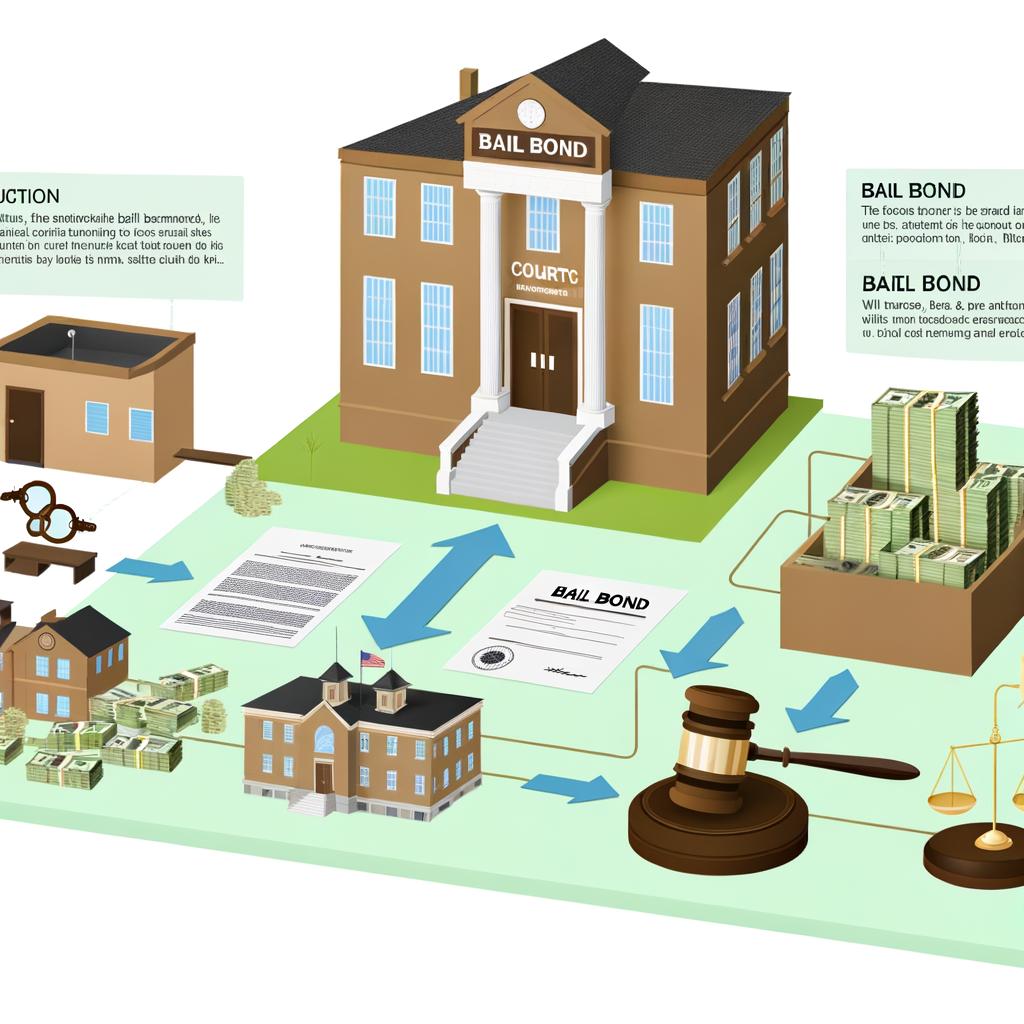
Bail Bonds business, in jurisdictions that use them, operate as exclusive guarantors. A guaranty bond allows an accused to pay a portion of the overall quantity, usually 10 percent, in exchange for the bail bondsman's warranty. Judges understand the auto mechanics. What they appreciate is the functional result: does the financial risk plus the bail bondsman's supervision decrease the danger of nonappearance. The solution varies. Some bondsmen actively check clients, send tips, and coordinate transportation to court. Others do little bit past creating the bond. Where a bondsman offers a clear guidance strategy and can point to a track record in the courthouse, courts sometimes treat the surety as a stabilizing factor.
Defense advice ought to not treat money as the only lever. If the judge believes the core risk comes from disorderly life scenarios or energetic evasion, a high number without encouraging framework looks like an attempt to paper over the trouble. Better to suggest a plan: a modest guaranteed bond, third‑party custodianship by a relative, and regular check‑ins. If a Bail Bonds agent is involved, guidance should be ready to define exactly what the agent will certainly do to aid ensure attendance.
Technology, conditions, and real‑world frictions
Conditions serve 2 purposes in flight‑risk management: they enhance the cost of fleeing and they minimize the chances that small disturbances become missed out on court. GPS tracking, travel limitations, and ticket surrender raise the obstacle to absconding. On the softer side, tip systems and routine pretrial guidance maintain the instance in the accused's weekly rhythm.
Judges recognize that general practitioner is not a silver bullet. People can cut arm bands, and monitoring ability differs by county. However GPS can get comfort where the judge requires an acting protect, particularly in situations with out‑of‑state connections. Traveling constraints, such as restricting movement to the judicial area, prevail. Ticket surrender is purposeful just if the individual has a passport, so defense attorney should be ready to verify that detail.
Even simple logistics matter. Trusted transportation reduces failings to show up. When a judge listens to that the offender resides on a bus line that runs occasionally, and court is established for 8:30 a.m., they may integrate in slack by needing the accused to arrive early, sign in with pretrial solutions, and even routine in the late morning. Those accommodations occur regularly than people believe, specifically for low‑level costs where the system benefits from conformity rather than incarceration.
The silent weight of court reputation
Judges operate in an environment. Prosecutors, defense attorney, and pretrial policemans develop online reputations for being accurate regarding facts on the margins. An attorney who oversells connections or escapes direct concerns about a prior FTA will struggle to win close calls later. On the various other hand, a public defender who candidly confesses the weak spots and proposes reasonable conditions frequently makes reputation that repays when it matters.
Defendants, as well, bring reputational signals. If an individual has previously shown up voluntarily after being informed of a charge, that brings real weight. I have seen courts soften problems when they listen to that the accused self‑surrendered without case, also when the fee was severe. By comparison, a current voluntary departure from the jurisdiction after knowing of a pending examination causes suspicion that the individual will repeat the behavior.
The human formula: motivations and anchors
Flight risk is about incentives and supports. Rewards include the likelihood of conviction and the seriousness of penalty. Anchors consist of household, job, healthcare, college, housing, and neighborhood participation. When anchors outnumber and outweigh rewards, the court favors launch with light conditions. When motivations loom large and supports are weak, problems tighten up, or release ends up being unlikely.
Concrete examples aid:
- A mid‑level supervisor charged with embezzlement carries a legitimate risk of a multi‑year sentence if founded guilty. Evidence consists of bank records and a cooperating witness. Anchors are solid: two children in regional colleges, a home mortgage, and the defendant has actually continued to be employed. With those truths, a judge might enforce a protected bond at a manageable degree, key abandonment, no worldwide traveling, and routine check‑ins. Since the supports are solid and the person self‑surrendered, a Bail Bonds guarantee, if utilized, would likely be modest. A 22‑year‑old with a prior bench warrant on an offense burglary currently encounters a felony robbery. The proof hinges on an unrealized fingerprint and a next-door neighbor's vague description. The defendant sleeps at different friends' homes, has no secure work, and recently missed a pretrial meeting on one more instance. Right here, the incentive to run away is modest, yet the supports are weak. A court may buy GPS, regular pretrial guidance, and a greater protected bond, potentially calling for a surety via a bondsman that accepts active tips. Problems intend to create man-made supports where natural ones are lacking. A noncitizen defendant with deep origins, no key, a U visa application pending, and a clean history of looks faces a drug property charge. The lawful risk is not trivial, however removal issues are speculative, and anchors are strong. A court might give release on recognizance with moderate problems, regardless of the migration background, because historical habits signals reliability.
Evidence that moves judges
Lawyers commonly underestimate the impact of tiny, proven details. A couple of products regularly shift a court's self-confidence:
- Documentation of employment with contact details for a supervisor going to validate hours and responsibilities. Proof of steady real estate, consisting of a lease, a signed letter from a proprietor, or energy costs in the defendant's name. Medical records that describe caregiving functions or therapy routines that connect the defendant to neighborhood providers. Travel documents, or the lack thereof, consisting of explicit confirmation that the defendant has no passport or has actually surrendered it to counsel. A simple calendar mapping court dates against the offender's work shifts, coupled with a letter from the company recognizing the demand for time off.
Those pieces tell a story the court can believe. They likewise aid pretrial services craft realistic check‑in schedules and aid the staff's workplace set dates that lower the danger of inescapable conflicts.
The prosecutor's lens
Prosecutors focus on patterns and leverage factors. They highlight recent FTAs, out‑of‑state connections, cash money accessible at arrest, and statements suggesting intent to leave. They in some cases use to agree to lower monetary problems for stricter non‑monetary ones, such as general practitioner or time limits. This can be calculated: a high number looks corrective and threats reversal, while targeted conditions survive far better on appeal.
Good prosecutors stay clear of overstating their hand. If their instance depends upon unstable recognition, they take the chance of integrity by assuring a near‑certain conviction to inflate the regarded incentive to flee. An honest evaluation, paired with significant concerns regarding logistics or prior disagreement, reverberates more with courts and often produces a durable order.
The defense path: build the record prior to you argue
Bail hearings rarely award improvisation. Defense attorney should assemble the record early. That consists of confirming addresses, accumulating employment papers, lining up third‑party custodians, and preparing the offender to speak briefly, if in any way. Judges see accuseds while legal representatives suggest. Made up, respectful actions helps. Rambling explanations or damaging the legal representative's discussion hurts.
A practical strategy that usually functions is to recommend tiered problems: recognize that the court needs to take care of threat, then reveal why lighter measures will "reasonably assure" look. "Fairly" is words the legislation makes use of. Perfection is not the requirement. When counsel frames the ask around sensible assurance, backed by evidence, judges listen to alignment with the statute instead of a plea for unique treatment.
The duty of pretrial services
Pretrial services policemans are the court's eyes and ears. Their records bring genuine weight because they are perceived as neutral. They confirm history information, examine risk utilizing verified devices, and suggest problems. A record that classifies somebody as low threat and recommends launch without monetary problems frequently anchors the judge's choice. Defense attorney must involve with pretrial very early, make certain the offender is obtainable, and remedy any kind of mistakes rapidly. If a record contains errors, requesting for a short continuation to send documents is much better than compeling the court to select with a problematic record.
Risk evaluation devices are helpful, yet not fate. Juries deviate from the tool's recommendation when case‑specific facts justify it. They are also sharp to reviews of mathematical predisposition and over‑reliance on previous apprehensions. Concrete, personalized information still wins the day.
Regional distinctions and regional custom
Flight danger evaluation lives within local custom-made. Some counties like non‑monetary conditions and keep money bonds uncommon. Others lean on safeguarded amounts with the assumption that a family members will collaborate with a Bonds agent. The very same accused can get extremely different therapy throughout jurisdictions, not because the legislation is different, but due to the fact that society is.
Lawyers that practice on a regular basis in a courthouse learn what moves specific judges. One court may rely on GPS to take care of virtually any type of flight danger unless the defendant is billed with a severe fierce violation. An additional may prioritize third‑party custodianship and a verifiable house over modern technology. These are not wild swings, however purposeful variations that shape outcomes at the margins.
When judges reject release on flight‑risk grounds
Denial happens, though less commonly than laypeople assume. When a court finds that no condition will sensibly assure appearance, the order should rest on particular realities: a history of absconding for expanded periods, energetic efforts to evade arrest, demonstrated accessibility to considerable funds and global connections, or a trustworthy plan to take off. I have seen denials stick where the offender acquired a one‑way ticket abroad after charge, or where a co‑defendant with close connections vanished and the remaining defendant had identical sources and plans.
Defense advice facing a denial should focus on modification gradually. New housing, validated work, a given up key, or a third‑party custodian can validate revisiting the order. Courts are more willing to reevaluate when the offender demonstrates continual compliance with prison policies, finishes a program, or shows clean corrective records. Juries seek new supports and minimized incentives, not recycled arguments.
How Bail Bonds match a well balanced package
In jurisdictions that permit them, Bail Bonds can shut the void in between what an accused can publish and what a court assumes is essential to safeguard look. A thoughtful package sets an affordable bond with non‑financial conditions. For example, a $25,000 guaranty bond, regular coverage, and take a trip restrictions might feel to the court like adequate friction to deter flight without jailing the person pretrial. Bondsmen who team up with pretrial solutions and provide attendance reminders develop reputation. Judges bear in mind when a bondsman shows up in court to attest an accused and to lay out just how they will certainly make sure attendance. That individual touch, while not called for, signals shared responsibility.
Families must ask bondsmen direct concerns: whether they provide reminders, what occurs if a court day modifications last minute, and how they coordinate with advice. Not all companies operate the same way. An agency that deals with the partnership as transactional gives less confidence to the court than one that runs as a real guaranty partner.
Practical steps that in fact help
A few actions constantly boost the chances of a desirable flight‑risk resolution:
- Gather hard evidence of ties: leases, energy expenses, pay stubs, institution enrollment letters, medical consultation logs, and letters from area leaders happy to attest to the offender's presence and reliability. Lock down logistics: confirm transportation prepare for court dates, identify back-up drivers, established phone suggestions, and acquire written employer adaptability for morning appearances. Eliminate very easy methods for flight: surrender any key voluntarily to advise, close out short‑term itinerary, and file that activity in writing for the court.
Each step turns abstract assurances into sensible safeguards. Juries compensate that diligence with tailored, practical conditions.
The quiet art of right‑sizing conditions
Over conditioning launch can backfire. Too much requirements create failure points and turn convenient danger into unnecessary infractions. Courts recognize this, and good ones adjust. If a defendant has no history important misuse, mandatory treatment will certainly not enhance court presence. If an individual has a stiff job routine, twice‑weekly in‑person check‑ins might be counterproductive when a regular phone check‑in would be enough. Defense attorney ought to help the court right‑size by clarifying genuinely what the offender can preserve while conforming fully.
On the opposite side, under‑conditioning produces danger of real absconding. When the instance carries strong motivations to get away and the anchors are weak, missing conditions like general practitioner or a protected bond, individuals occasionally go away. Judges do not such as issuing bench warrants and shedding docket time to track avoidable failures. They will err on the side of a little bit a lot more structure if guidance can not show how attendance will be dependably achieved.
An honest note on human behavior
People turn up for court when three points align. They think they will be dealt with relatively, they see a path through the procedure, and they have the means to arrive. Fairness assumption is not simply an ethical notion; it is a behavior vehicle driver. If an accused assumes the deck is piled, the temptation to skip rises. Advice can reduce this by explaining the procedure clearly, setting expectations, and demonstrating that involvement brings tangible benefits, like favorable plea conversations or credit rating for program conclusion. Method to get there is literal: childcare, bus fare, pause work. Judges respond well to propositions that fix those practical problems.
Final thought: integrity, not rhetoric
Flight threat is not a rhetorical problem. It is a fact pattern, a forecast, and a plan. Judges react ideal to reputable information, offered with humility and backed by files or testimony. The ideal mix of supports and safeguards can secure release also in serious instances. On the other hand, the wrong combination can sink a minor situation right into unneeded detention. Lawyers who deal with the hearing as a problem in practical risk monitoring, as opposed to a stage for broad speeches, boost end results for their customers and the courts.
Bail choices will certainly never be perfect. They do not require to be. The legislation requests for reasonable guarantee, and that typical recognizes both the restrictions of prediction and the value of organized depend on. Develop the anchors, cut the incentives, tighten up the sides where you must, and provide a package the judge can protect on the record. When all of that comes together, flight threat ends up being manageable, and individuals can battle their instances while maintaining their jobs, their family members, and their ground in the community.